23 Jul 2026


Every parent reaches a point when they ask the same question:
"Is my child ready for preschool?"
Some children seem eager to explore the world beyond home, while others prefer staying close to their parents. It's natural to wonder whether there's a "perfect" age to begin preschool or whether starting earlier,or later,makes a difference.
The truth is, there isn't a one-size-fits-all answer. Child development experts agree that while age is important, a child's emotional, social, and developmental readiness matters just as much.
In this guide, we'll explore what experts say about the best age to start preschool, the signs your child is ready, and how choosing the right preschool can help build a strong foundation for lifelong learning.
Why Preschool Matters
Preschool is much more than a place where children learn the alphabet or numbers. It's often a child's first experience of learning, making friends, following routines, and becoming independent.
Quality early childhood education helps children develop:
- Communication and language skills
- Social and emotional confidence
- Curiosity and creativity
- Early literacy and numeracy
- Problem-solving abilities
- Independence and self-help skills
These foundational skills make the transition to primary school smoother while nurturing a lifelong love for learning.
What Is the Ideal Age to Start Preschool?
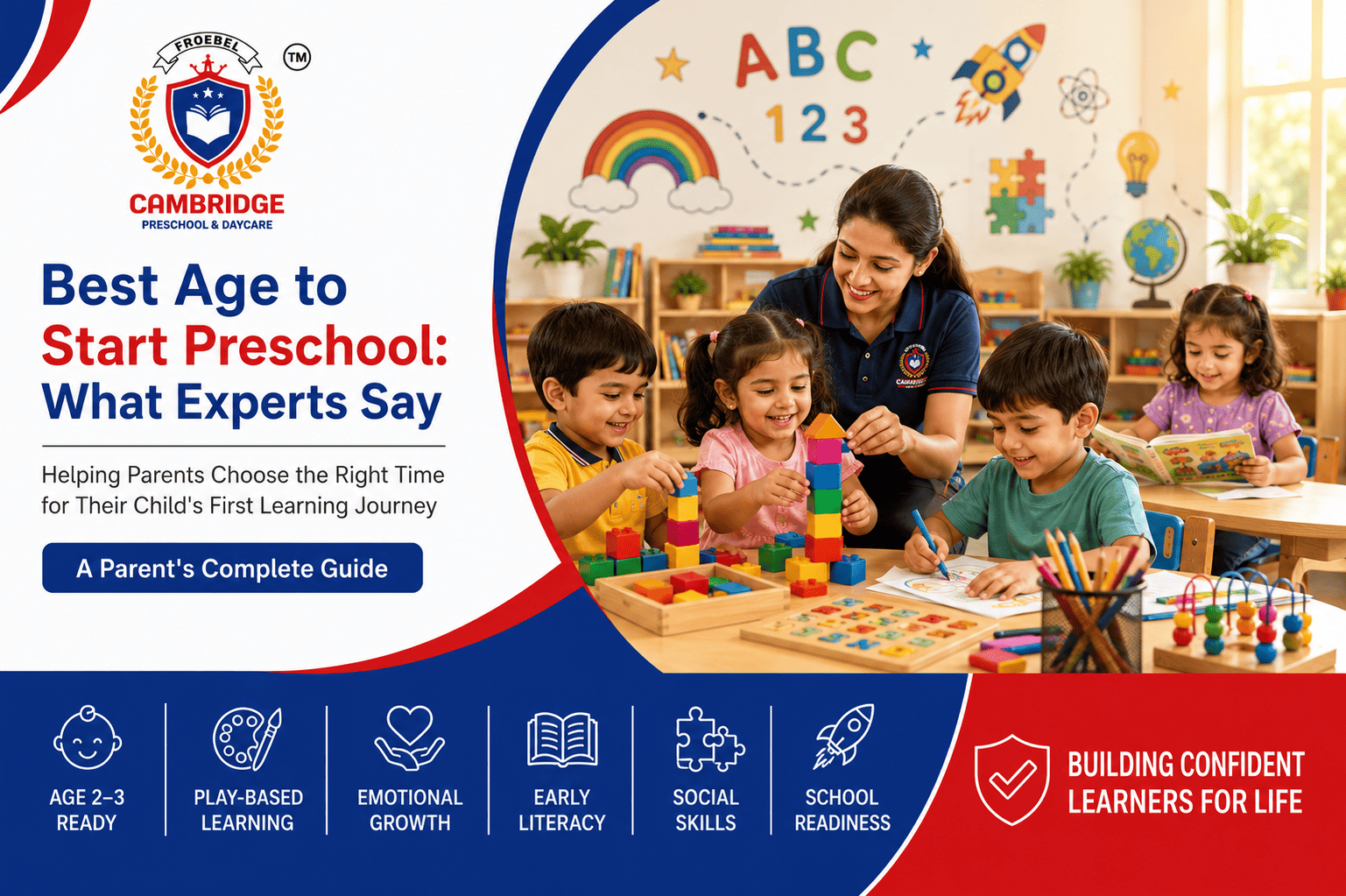
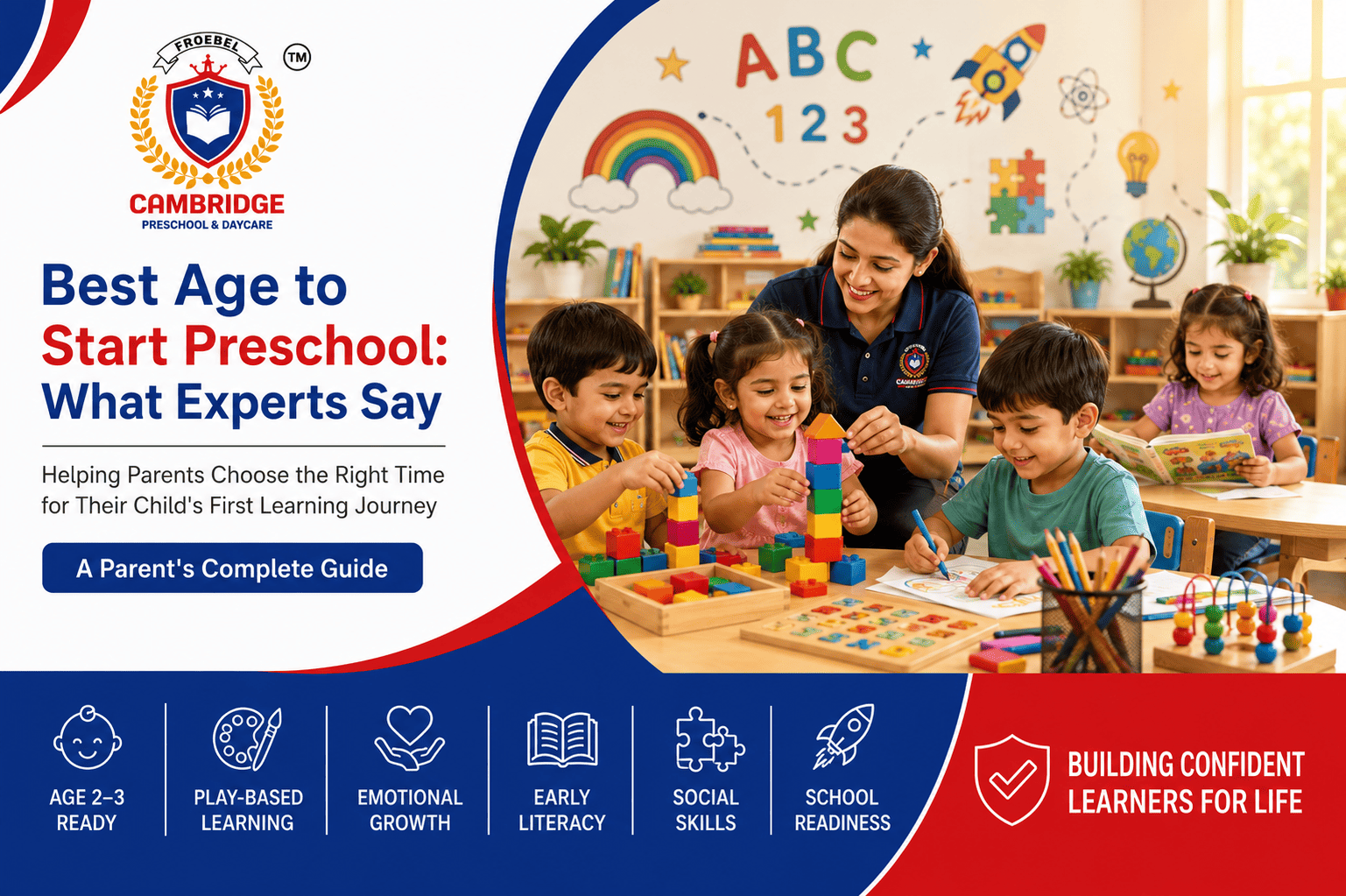
Most early childhood education experts recommend introducing children to preschool between 2 and 3 years of age, depending on their individual readiness.
Here's a general guide:
2-3 Years: Pre-Nursery
Children in this age group are naturally curious and eager to explore. A structured preschool environment helps them become comfortable with routines, interact with other children, and develop independence away from home.
At this stage, learning happens through songs, storytelling, sensory activities, art, and play.
3-4 Years: Nursery
Children begin strengthening their communication, social, and cognitive skills. They become more comfortable participating in group activities, following simple instructions, and expressing themselves.
This is also when early literacy and numeracy are introduced through playful, engaging experiences.
4-5 Years: Lower Kindergarten (LKG)
As children grow, they become more confident learners. Activities focus on language development, early mathematics, creative thinking, and problem-solving while continuing to encourage play and exploration.
5-6 Years: Upper Kindergarten (UKG)
The focus shifts toward preparing children for formal schooling. They develop stronger reading readiness, writing skills, logical thinking, and classroom independence without compromising the joy of learning.
Signs Your Child Is Ready for Preschool
Instead of focusing only on age, experts recommend looking for developmental signs that indicate your child is ready.
Your child may be prepared for preschool if they:
- Show curiosity about other children.
- Can stay away from parents for short periods.
- Follow simple instructions.
- Express basic needs through words or gestures.
- Enjoy exploring new activities.
- Begin showing interest in books, songs, or storytelling.
- Are learning simple self-help skills such as eating independently or washing hands.
Every child develops at their own pace. Some children are ready at two, while others benefit from waiting a few more months.
Why Starting Too Early Isn't Always Better
Many parents worry that delaying preschool might put their child behind. In reality, enrolling a child before they are emotionally ready can make the transition stressful.
Children who experience excessive anxiety, struggle with separation, or aren't comfortable in group settings may need more time and gradual exposure.
The goal isn't to start preschool as early as possible,it's to start at the right time for your child.
A nurturing preschool with experienced educators can make this transition gentle and enjoyable.
The Role of Play in Early Learning
Young children don't learn best by sitting at desks or memorising information.
They learn by exploring, asking questions, experimenting, building, pretending, and playing.
That's why play-based learning is recognised worldwide as one of the most effective approaches to early childhood education.
Through purposeful play, children naturally develop:
- Communication skills
- Creativity
- Critical thinking
- Emotional regulation
- Social confidence
- Fine and gross motor skills
At Froebel Cambridge Preschool & Daycare, every activity is thoughtfully designed to transform everyday play into meaningful learning experiences.
Why Modern Preschools Focus on Holistic Development
Today's preschool education goes beyond academics.
Parents are increasingly choosing schools that nurture the whole child, emotionally, socially, physically, and intellectually.
A quality preschool should help children become:
- Confident communicators
- Independent learners
- Creative thinkers
- Compassionate friends
- Curious explorers
At Froebel Cambridge Preschool, our approach combines play-based learning, Montessori-inspired education, experiential activities, and STEM exploration, ensuring children develop essential life skills alongside academic readiness.
How Parents Can Prepare Their Child for Preschool
Starting preschool is a significant milestone, and parents play an important role in making the transition smooth.
Here are a few simple ways to help:
- Establish a consistent daily routine.
- Encourage your child to do small tasks independently.
- Read books together every day.
- Talk positively about preschool.
- Arrange opportunities for social interaction.
- Allow your child to make simple choices to build confidence.
Most importantly, be patient. Every child adjusts at their own pace.
Choosing the Right Preschool Makes All the Difference
The age your child starts preschool matters,but the environment matters even more.
Look for a preschool that offers:
- A safe and nurturing atmosphere
- Experienced and caring teachers
- Age-appropriate curriculum
- Play-based and experiential learning
- Opportunities for social and emotional growth
- Individual attention
- Open communication with parents
A preschool should inspire children to love learning, not fear it.
Why Parents Trust Froebel Cambridge Preschool & Daycare
At Froebel Cambridge Preschool & Daycare, we understand that every child's journey is unique.
Our child-centred approach combines the best of UK-inspired educational practices with Indian values, creating an environment where children feel safe, valued, and inspired to learn.
With Montessori-inspired classrooms, STEM learning, creative exploration, and play-based education, we help children build confidence, curiosity, and essential life skills during their most important developmental years.
We don't just prepare children for school, we prepare them for life.
Final Thoughts
So, what is the best age to start preschool?
Experts agree that most children benefit from starting between 2 and 3 years of age, provided they are emotionally and developmentally ready. Rather than comparing milestones with other children, focus on your child's individual needs and choose a preschool that nurtures their unique potential.
A joyful beginning creates confident learners, resilient individuals, and compassionate future leaders.
At Froebel Cambridge Preschool & Daycare, we're proud to be part of that journey, helping every child take their first steps toward a bright and successful future.
Admissions Open
📍 Froebel Cambridge Preschool & Daycare
Early Learning, The Cambridge Way. Where UK Curriculum Meets Indian Values.
More Related Blog
At Froebel Cambridge Preschool & Daycare, we understand that every child's journey is unique.