23 Jul 2026


One of the greatest joys of parenting is hearing your child say their first words. But communication is about much more than speaking. It's about expressing thoughts, understanding emotions, listening, asking questions, and building meaningful relationships.
Strong communication skills don't develop overnight, they are nurtured through everyday experiences, conversations, and positive interactions during the early years of life.
If you've ever wondered how to improve your child's communication skills, the good news is that small, consistent efforts can make a big difference. Let's explore why early communication matters and how parents can support language development naturally.
Why Early Communication Skills Are So Important
The first six years of a child's life are a remarkable period of brain development. During this time, children absorb language rapidly by listening, observing, and interacting with the people around them.
Good communication skills help children:
- Express their thoughts and emotions clearly
- Build self-confidence
- Make friends and develop social skills
- Improve listening and comprehension
- Strengthen reading and writing readiness
- Develop critical thinking and problem-solving abilities
Children who communicate confidently often adapt more easily to preschool and later academic environments because they feel comfortable asking questions, participating in activities, and expressing their needs.
Communication Begins Long Before Talking
Many parents believe communication starts when children begin speaking. In reality, it begins much earlier.
From birth, babies communicate through eye contact, facial expressions, gestures, sounds, and body language. Every smile, response, and conversation helps strengthen the neural pathways responsible for language development.
The more children hear rich, meaningful conversations, the stronger their vocabulary and communication abilities become.
Talk to Your Child Throughout the Day
One of the simplest and most effective ways to improve language development is to talk to your child regularly.
Describe everyday activities as they happen.
For example:
"Let's wash your hands before lunch."
"Look at the colourful flowers in the garden."
"Can you hear the birds singing?"
These simple conversations expose children to new vocabulary and help them understand how language is used naturally.
Even if your child isn't speaking yet, they are listening and learning.
Read Together Every Day
Reading is one of the most powerful tools for developing communication skills.
Storybooks introduce children to new words, sentence structures, emotions, and ideas while encouraging imagination.
Instead of simply reading the words, make storytelling interactive.
Ask questions like:
- "What do you think happens next?"
- "How do you think the little bear feels?"
- "Can you find something red on this page?"
These conversations encourage children to think, observe, and express themselves.
Just 15–20 minutes of reading each day can significantly strengthen vocabulary and listening skills.
Encourage Conversations, Not Just Answers
Many conversations with young children become one-sided.
Instead of asking questions that only require "yes" or "no" answers, encourage open-ended conversations.
Try asking:
- "What was your favourite part of today?"
- "Why do you think that happened?"
- "How would you solve this problem?"
- "What would you do if you were the character in the story?"
Open-ended questions help children organise their thoughts and communicate more confidently.
Limit Passive Screen Time
While educational videos can occasionally be helpful, they should never replace real conversations.
Children develop language best through interaction with people, not screens.
Talking, singing, reading, playing, and exploring together provide far richer opportunities for language development than passive viewing.
Experts recommend balancing screen time with meaningful face-to-face communication and hands-on experiences.
Let Children Learn Through Play
Play is one of the most effective ways children develop communication skills.
Whether they're pretending to run a grocery store, playing doctor, building a castle, or cooking an imaginary meal, children naturally use language to explain, negotiate, imagine, and interact.
Play-based learning helps children:
- Expand vocabulary
- Practice conversations
- Develop storytelling skills
- Build confidence in speaking
- Improve listening and cooperation
At Froebel Cambridge Preschool & Daycare, communication develops naturally through storytelling, role play, music, collaborative games, and creative activities that encourage children to express themselves freely.
Be a Good Listener
Children are more likely to communicate when they feel heard.
When your child speaks, pause what you're doing, make eye contact, and listen patiently.
Avoid finishing sentences for them or correcting every small mistake.
Instead, respond positively and gently model the correct language.
For example:
Child: "I goed to park."
Parent: "Yes, you went to the park! That sounds like so much fun."
This approach builds confidence while naturally reinforcing correct language.
Encourage Social Interaction
Children learn communication by communicating.
Opportunities to interact with peers help them practice sharing ideas, listening, taking turns, solving conflicts, and expressing emotions.
A nurturing preschool environment provides countless opportunities for children to develop these essential communication skills every day.
Group activities, storytelling sessions, music, pretend play, and collaborative learning all contribute to stronger language development.
How Preschool Supports Communication Skills
A quality preschool creates an environment where communication becomes part of everyday learning.
Children participate in:
- Storytelling sessions
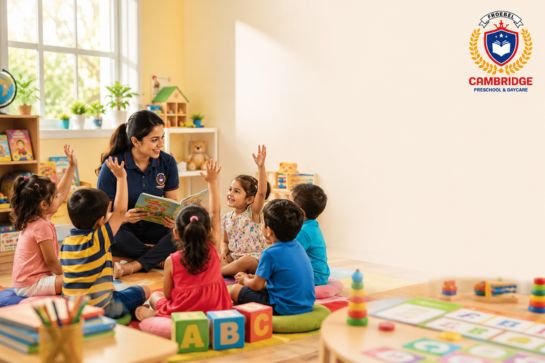
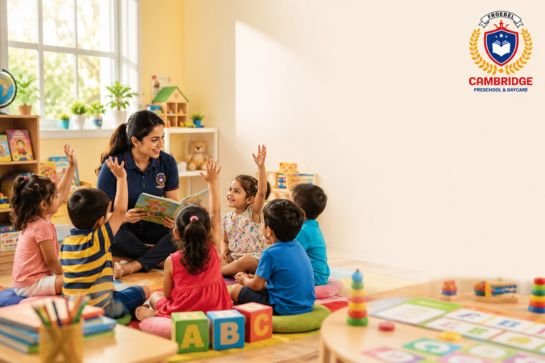
- Circle time discussions
- Rhymes and songs
- Role play and drama
- Group projects
- Creative expression
- Show-and-tell activities
These experiences help children become confident speakers while also learning the equally important skill of listening.
At Froebel Cambridge Preschool & Daycare, communication is woven into every aspect of the learning journey. Our child-centred approach encourages children to ask questions, express ideas, share experiences, and develop confidence through meaningful interactions.
Small Habits That Make a Big Difference
Supporting communication doesn't require expensive resources. Small daily habits often have the greatest impact.
Try to:
- Read together every day.
- Sing songs and nursery rhymes.
- Encourage pretend play.
- Ask thoughtful questions.
- Spend uninterrupted time talking.
- Celebrate every communication milestone.
- Create opportunities for social interaction.
Consistency matters more than perfection.
Final Thoughts
Every conversation you have with your child helps shape the way they understand the world.
Strong communication skills are the foundation for learning, friendships, confidence, and future success. By creating a language-rich environment filled with conversation, stories, play, and encouragement, you're giving your child one of the greatest gifts they can receive.
At Froebel Cambridge Preschool & Daycare, we believe every child deserves the opportunity to find their voice. Through play-based learning, storytelling, creative expression, and meaningful interactions, we nurture confident communicators who are ready to explore the world with curiosity and confidence.
Because great learners begin as great communicators.
Admissions Open
Froebel Cambridge Preschool & Daycare
Where UK Curriculum Meets Indian Values. Building Global Minds with Local Hearts.